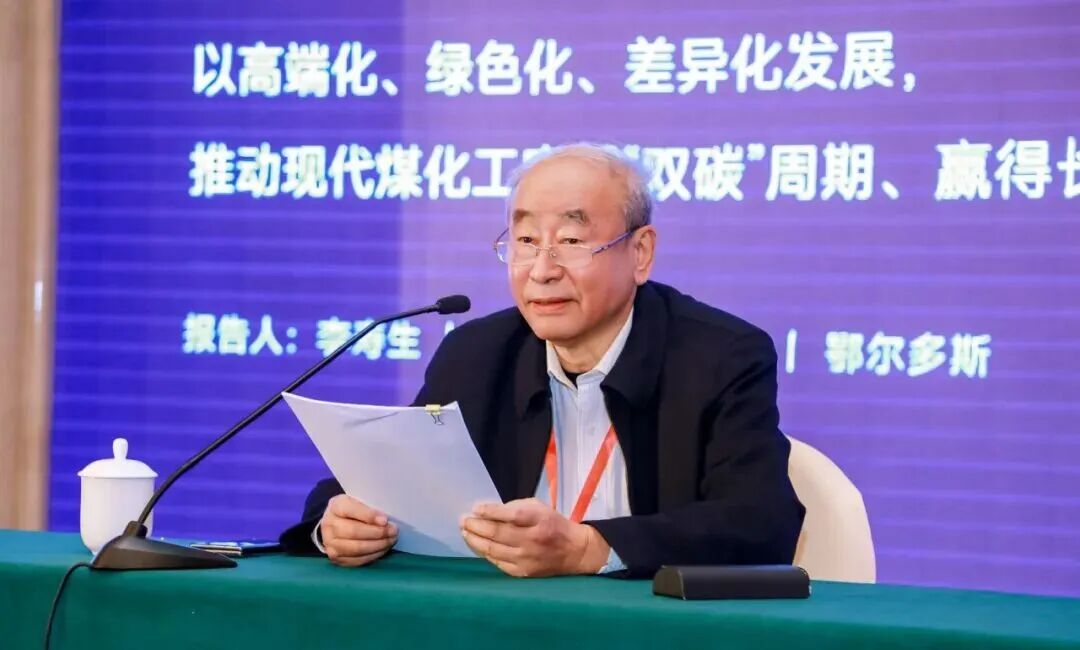
Recently, Li Shousheng, President of the 4th Council of the China Petroleum and Chemical Industry Federation (CPCIF), delivered a keynote report titled "During the 15th Five-Year Plan, China's Modern Coal Chemical Industry Will Not Pursue Blind Expansion of Increment, but Seek High-End Breakthroughs on the Existing Base." The report reviews modern coal chemical achievements since the 13th Five-Year Plan, analyzes the industry's real challenges, interprets the opportunities ahead during the 15th Five-Year Plan, and charts a course for upgrading existing capacity and high-end transformation.
During the 15th Five-Year Plan, China's Modern Coal Chemical Industry Will Not Pursue Blind Expansion of "Increment," but Seek High-End Breakthroughs on the "Existing Base."
Li Shousheng, Former President, China Petroleum and Chemical Industry Federation (CPCIF)
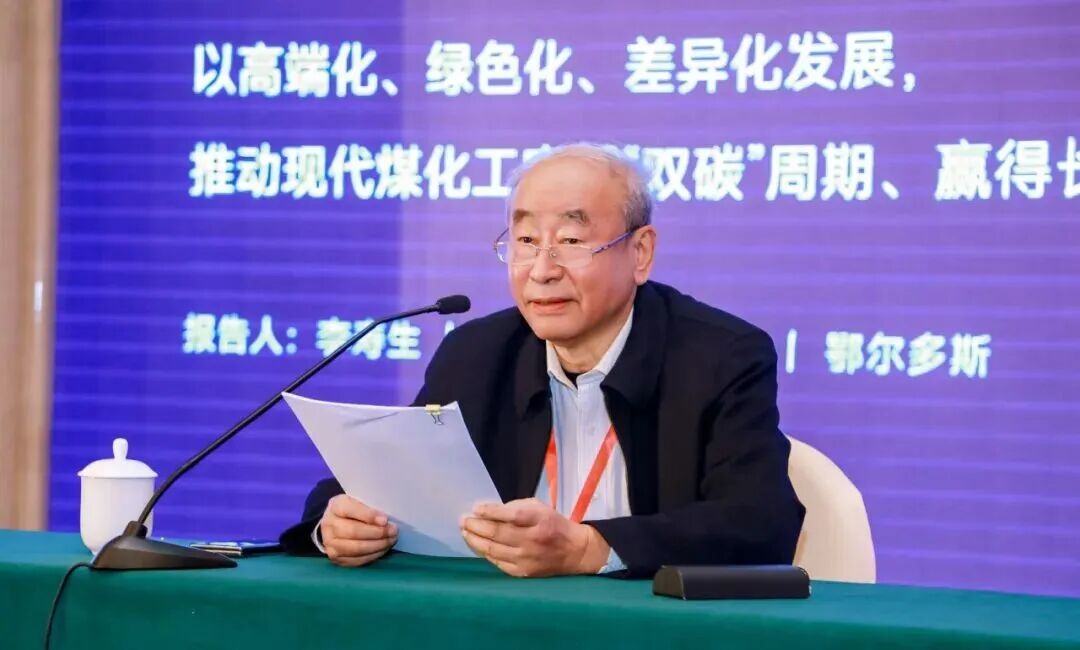
Distinguished leaders, experts, and colleagues,
It is a great pleasure to return to Ordos this golden autumn. On the national map of modern coal chemical industry, Ordos holds a pivotal position — it is home to the world's first million-tonne direct coal liquefaction plant, hosts world-leading indirect coal liquefaction and coal-to-olefins clusters, and is emerging as a national pioneer in coupling new energy with coal chemicals. Holding this modern coal chemical conference in Ordos, at the opening year of the 15th Five-Year Plan, is both timely and instructive.
As you know, the 15th Five-Year Plan is a pivotal five-year period as China builds toward socialist modernization, and a make-or-break window for modern coal chemicals to navigate the "dual carbon" cycle and secure long-term competitiveness. Looking back at the 13th and 14th Five-Year Plans, and forward to the 15th, our generation carries a historic mission: to move modern coal chemicals from "scale leadership" to "high-end value." That is why I chose this title.
My report is: During the 15th Five-Year Plan, China's modern coal chemical industry will not pursue blind expansion of "increment," but seek high-end breakthroughs on the "existing base." I have thought about this judgment for a long time. There is debate inside and outside the industry. One camp says: China's crude oil import dependence is still around 70%, and natural gas over 40%; energy security is tightening, so modern coal chemicals should keep expanding aggressively. The other camp says: with dual carbon goals pressing in, carbon emissions, water and environmental capacity are tightening the vise; the ceiling for coal chemicals is already visible, and the sector should contract and pivot. I believe both views are one-sided and miss the core contradiction.
After 20-plus years of relentless effort, China's modern coal chemical industry has achieved world-renowned results, built a relatively complete industrial and technology system, and ranks among the global leaders in scale. Notably, in 2025, China's coal-as-feedstock increment was about 66 million tonnes of coal equivalent, while fossil energy consumption fell by about 15 million tonnes — the first time feedstock coal growth exceeded fossil fuel consumption growth. This historic shift signals that China's fossil energy use is accelerating from fuel to feedstock/material. The principal contradiction now is no longer "whether we have it" or "whether to build it," but "whether it is good, high-end, and sustainable." In 18 words: no blind expansion of increment, but high-end breakthroughs on the existing base. Increment must be controlled; the existing base must be optimized. The era of counting scale expansion is over, but the account of high-end breakthroughs must be reckoned deeply, carefully and thoroughly.
I will cover three parts: (1) the world-leading achievements since the 13th Five-Year Plan; (2) three major challenges; (3) six opportunities we must seize during the 15th Five-Year Plan.
I. Major world-leading achievements since the 13th Five-Year Plan
In barely two decades, China's modern coal chemical industry has covered the distance that took developed nations over half a century — from pilot demonstration to industrial maturity, from "catching up" and "running alongside" to "leading in places." Achievements fall into four areas.
First, historic leap in scale — the world's largest and most complete modern coal chemical system.
In 2015, China's coal-to-liquids capacity was only 2.78 Mt/year, coal-to-SNG 3.1 billion m³/year, coal(methanol)-to-olefins 7.92 Mt/year, and coal-to-ethylene glycol 2.12 Mt/year. By end-2025, coal-to-liquids exceeded 9.5 Mt/year, coal-to-SNG 7.45 billion m³/year, coal-to-olefins nearly 20 Mt/year, and coal-to-ethylene glycol over 12 Mt/year. All major routes rank first globally. No other country has such a complete industrial spectrum. Coal-to-olefins now account for ~20% of China's total olefins capacity, coal-to-EG ~38% of total EG capacity, and coal-to-methanol over 80% of total methanol output. Modern coal chemicals are no longer a discretionary "supplement" but an indispensable "strategic pillar" in China's diversified petrochemical feedstock supply.
In 2024, the four main product lines converted 138 Mtce/year of coal, actually processing about 120 Mtce and replacing ~38.1 Mt oil-equivalent — equivalent to adding a new 40-Mt/year refinery. Industry revenue reached ~RMB 202.6 billion with profit of ~RMB 11.9 billion, up 178% year-on-year — a turnaround from "barely surviving on thin margins" to "improving profitability." Modern coal chemicals have grown from a national energy "backup" into a key pillar supporting energy security and diversified petrochemical feedstocks.
Second, trillions in investment have driven a leap in major equipment manufacturing.
From the 13th to the end of the 14th Five-Year Plan, cumulative investment in modern coal chemicals reached about RMB 1.2 trillion. During the 14th Plan, landmark projects started up or advanced across the four bases of Ordos, Yulin, Ningdong and Zhundong, with Zhundong and Hami in Xinjiang emerging as the most promising new growth poles. Single-project investments often run into tens of billions — a 4-Mt indirect liquefaction unit rivals the infrastructure build-out of a mid-sized city. More important is the multiplier effect: equipment accounts for ~55% of total project investment, directly upgrading large air separation units, large gasifiers, large compressors, specialty valves and high-end instrumentation. The three mainstream coal gasification processes are all domestically mastered; large air separation localization exceeds 70%; a series of long-import-dependent "chokepoint" equipment and materials have been broken through. Modern coal chemicals are both a chemical industry and a "proving ground" and "review stand" for China's major equipment localization.
Third, systematic technology breakthroughs — a string of "world firsts" born in China.
- The world's only million-tonne direct coal liquefaction industrial unit sits in Ordos — CHN Energy's 1.08 Mt/year direct liquefaction project runs stably long-term, turning coal directly into clean oil, a goal that eluded generations of German, American and Japanese engineers but that China achieved.
- The world's largest single-train indirect coal liquefaction unit — Ningxia Coal Industry's 4 Mt/year plant runs safely, stably, long-term and at high utilization; high-temperature Fischer-Tropsch synthesis completed 100-kt industrial demonstration, breaking the foreign monopoly.
- Methanol-to-olefins: DICP's DMTO series supports 30+ commercial units and has licensed technology overseas, holding global leadership.
- The 0.5 Mt/year coal-to-EG plant runs at full load stably; the world's hardest syngas-to-EG route was industrialized first in China.
Additional breakthroughs include coal-to-aromatics, coal-to-ethanol and coal-to-biodegradable materials. Beneath the Ordos Basin, we also built the world's first full-process demonstration of CO₂ storage in saline aquifers for coal chemicals. Modern coal chemicals are the brightest showcase of indigenous innovation in China's petroleum and chemical sector — we have not only built the industry but mastered its technology leadership. Alongside technology and equipment came a hard-working talent pool across R&D, design, construction and operation, plus industry standards — Chinese standards, together with Chinese technology and equipment, are becoming the industry's common language.
Fourth, base-based, park-based, clustered layout — a uniquely Chinese industrial geography.
The four national demonstration bases designated by NDRC and MIIT — Ordos, Yulin, Ningdong and Zhundong — are all built out, joined by the new Xinjiang poles of Zhundong and Hami. Over 80% of national modern coal chemical capacity concentrates in coal-rich regions, forming a "Golden Energy Triangle" plus the new Xinjiang map. Each base has its own character: Ningdong leads in coal-to-liquids and fine chemicals and is a national model for circular resource use; Yulin builds circular chains from coal, oil, gas and salt; Zhundong develops coal-power-chemicals integration around Xinjiang coal conversion and outward transmission; Ordos, in a single city, gathers the full spectrum — coal-to-liquids, coal-to-SNG, coal-to-olefins, coal-to-fertilizer — with clusters such as Dalu Industrial Park and Sulige Economic Development Zone hosting upstream-downstream ecosystems of leaders like Zhongtian Hechuang, Yitai and Huineng alongside many specialized "little giant" enterprises. Park-based development has fundamentally replaced the old scattered pattern of "every village lighting its own fire," delivering shared efficiency in safety, utilities and logistics, and opening a new path for resource-region transformation.
With achievements established, we can discuss problems candidly. But achievements must not mask contradictions — whose nature is changing profoundly.
II. A new and critical transition period
What is a transition period? The principal contradiction has shifted. Over the past two decades we solved "from nothing to something," competing on scale and speed. Over the next five years we face "from something to excellence," competing on technology, structure and sustainability. The contradictions show in three challenges. Let me put numbers on the table.
Challenge 1: Homogeneous end-products — structural contradictions are already acute.
Product homogeneity is severe today. Coal-to-olefins capacity approaches 20 Mt, yet over 80% of downstream output concentrates on generic-grade PE and PP. Coal-to-EG capacity exceeds 12 Mt, but utilization has lingered around 50%, with roughly half the industry losing money or barely breaking even — operators quip that "running the unit loses cash flow, while shutting it loses depreciation." Coal-to-liquids output also concentrates on a few commodities like diesel and naphtha. Think about it: after going to all the trouble of converting coal into olefins and oil, we still sell generic commodities at market, competing on cost and price against coastal multi-million-tonne integrated refining-chemical projects and a steady stream of imported light-hydrocarbon crackers. National polyolefin capacity exceeds 80 Mt and EG capacity over 20 Mt; the generic-product market is finite. More importantly, China's overall polyolefin import dependence has fallen to ~10%, signaling near-saturation in commodities; yet high-end grades and specialty resins remain less than 50% self-sufficient, and mPE and other high-end varieties are still heavily imported. The market is not short of demand — our supply structure cannot keep up with upgrading demand. Product homogeneity reflects weak downstream extension of the innovation chain and insufficient high-value, specialty, differentiated development. Unless this gap is closed, the larger our capacity, the bigger the accumulated risk. This is fundamentally a quality challenge on the "existing base" — the vast capacity already built must break through high-end to earn returns.
Challenge 2: High CO₂ emissions with limited outlets — green low-carbon constraints are tightening.
With dual carbon as a global consensus and green/low-carbon as the rule of international trade, carbon has shifted from a "development issue" to a "survival issue." Modern coal chemicals are among the highest-emitting process industries per unit product, dictated by coal's molecular structure — unavoidable, but must be faced. Producing one tonne of coal-to-olefins emits ~11 t CO₂; indirect liquefaction oil ~6.5 t; direct liquefaction oil ~5.8 t; coal-to-EG ~5.6 t. The petroleum route to olefins emits roughly one-third of that per tonne. National modern coal chemical CO₂ emissions already exceed 200 Mt/year. At this scale, the sector cannot stay outside rigid constraints indefinitely.
Policy is tightening: the state requires existing projects below industry energy-efficiency baselines to retrofit by end-2025 or be phased out. The national ETS keeps expanding — after steel, cement and electrolytic aluminum, chemicals entering the carbon market is only a matter of time; carbon prices trend upward, and every tonne becomes real cost. Consider: at 11 t CO₂ per tonne olefins and a carbon price of RMB 200/t, carbon cost alone adds ~RMB 2,200 per tonne olefins — eating up more than half of current industry profit. Carbon constraint is no longer abstract but a "cost floor" deciding project survival. Especially this year — from January 1, 2026, the EU CBAM enters its definitive levy period, and China's exported chemicals face transparent carbon-cost accounting for the first time. During the 15th Five-Year Plan, carbon quotas, like coal and water quotas, will become the scarcest resource for coal chemical projects. Unless CO₂ outlets are solved, headroom will shrink step by step. The whole industry must pass this gate; early movers act, late movers react.
Challenge 3: Water scarcity — the congenital mismatch of coal and water in reverse distribution.
Modern coal chemicals are water-intensive. Current averages: 15–20 m³ water per tonne coal-to-olefins, 10–20 m³ per tonne coal-to-EG, nearly 10 m³ per tonne coal-to-liquids, and ~8.6 m³ per thousand m³ coal-to-SNG. The numbers look small alone, but look at the layout: over 80% of projects sit in the middle-upper Yellow River basin and arid/semi-arid northwest. Yellow River basin coal chemical water use already reaches 530 million m³/year, projected to rise to 620 million m³ over the next five years — and this increment cannot touch the Yellow River's ecological flow floor; it must come from deep water conservation and non-conventional sources. Ningxia, Inner Mongolia and Shaanxi together hold only 3.85% of national water resources, with per-capita water below half the Yellow River basin average. The Yellow River "87" water allocation scheme long ago fixed the total pie; many parks cannot secure new water quotas. In recent years, projects have had land, EIA and energy permits approved only to stall on water quotas — we have all seen such cases.
The industry is making efforts: cooling tower concentration ratio upgrades, air cooling, reclaimed water reuse, and mine drainage utilization have cut water consumption year by year. Coal-to-EG water use per tonne has dropped from 20.8 to 11.3 m³; many Ordos parks turn mine drainage into process water, achieving local "coal-water balance." But this is relief, not cure. Since Yellow River basin ecological protection and high-quality development became a national strategy, "determining city, land, people and production by water" is the hard principle, and basin coal chemical water use will face its strictest-ever assessment. "How much soup, how much bread" — this plain logic is becoming project-access institutional logic. Water scarcity is no longer a distant worry but a present one; no longer a soft constraint but a hard one.
Colleagues, I lay out these challenges not to pour cold water, but to reach a basic judgment: challenges are opportunities. Industrial history is a history of turning pressure into momentum. Behind each challenge lies a new, high-potential track during the 15th Five-Year Plan. Whoever breaks through first wins the next five years. The plain dialectic: whether a challenge is a "roadblock" or a "door-opener" depends on our technological innovation and strategic courage. Facing challenges, lying flat offers no way out; only innovative breakout offers survival.
III. Six opportunities modern coal chemicals must seize during the 15th Five-Year Plan
Opportunity 1: High-end new materials — especially alpha-olefins.
If generic polyolefins are already overbuilt, high-end polyolefin localization has only just begun, and the key monomer is alpha-olefins — 1-hexene, 1-octene, and longer-chain alpha-olefins for premium grades. Alpha-olefins are the core feedstock for POE (polyolefin elastomer), mPE, high-grade lubricant base oil PAO, and high-end plasticizer alcohols — value several to ten-plus times that of generic olefins. The downstream star is POE, irreplaceable in photovoltaic encapsulation films; as PV installations keep growing, POE demand has risen fast — domestic demand approached one million tonnes in 2024 and is projected to exceed 1.5 Mt by the end of the 15th Plan, while domestic supply has barely started. Few modern chemical products combine such a large market and such fast growth. Long-chain alpha-olefins and POE have long been almost entirely imported in China — expensive and supply-controlled — repeatedly flagged as a "chokepoint." This is the most concrete market opportunity: rigid demand growth, huge import-substitution room, rich margins.
Rarely, the coal-based route has unique advantages for alpha-olefins. Coal-based production can yield not only even-carbon but also odd-carbon olefins. Fischer-Tropsch syncrude by-products contain substantial high-value alpha-olefins; Ningmei's 4-Mt indirect liquefaction unit and Yitai, Future Energy and other FT units have rich alpha-olefin streams to separate. MTO and ethylene oligomerization can directly yield 1-hexene and 1-octene; frontier direct syngas-to-alpha-olefin conversion is accelerating, with DICP and other teams showing promising original results. Farsighted coastal enterprises are already positioning high-end alpha-olefins on the C4 chain; the coal-based camp must not be absent, and must not "rise early but arrive late." Ordos simultaneously hosts direct liquefaction, indirect liquefaction and MTO — the richest coal-based alpha-olefin resources and fullest route coverage nationwide — and is fully capable of becoming a world-class high-end alpha-olefin and premium polyolefin feedstock base. The 15th Five-Year Plan is the key window to move coal-based alpha-olefins from R&D demonstration to scaled industrialization; this window must not be missed on our watch.
Opportunity 2: New-energy innovation — upgrading and coupling coal-to-hydrogen.
Hydrogen is a key pillar of the future energy system. China is the world's largest hydrogen producer at ~35 Mt/year, of which coal-to-hydrogen accounts for about two-thirds — currently the lowest-cost large-scale route globally, at roughly RMB 10/kg, versus green-electric hydrogen still over three times that cost. This basic picture will not change for the foreseeable future. The Medium- and Long-Term Plan for the Hydrogen Industry (2021–2035) sets hydrogen's national strategic position; FCEV demonstration continues; and wind/solar-to-hydrogen cost falls ~10% annually. By mid-to-late 15th Plan, green hydrogen may reach parity in resource-rich regions, at which point "coal-to-hydrogen as the floor, green hydrogen as the gradual successor" will bring a new cost and carbon curve to modern coal chemicals. But conventional coal-to-hydrogen is energy- and carbon-intensive and must be upgraded. Directions are clear: (1) scale and efficiency — large advanced gasification and polygeneration to push energy use and cost down further; (2) couple with CCS to upgrade coal-to-hydrogen into "blue hydrogen," serving as the "load-bearing wall" of hydrogen supply before green hydrogen scales; (3) deep coupling with renewables — replacing power fuel with green electricity and supplementing the shift section's H/C ratio with green hydrogen, cutting emissions at source. This is precisely "high-end breakthrough on the existing base" at the hydrogen unit.
Ningdong has pioneered this, planning 300 kt of green hydrogen by 2030 with substantial progress in renewable-hydrogen-coupled coal chemicals. Ordos has world-class wind/solar resources, rich coal and enormous application scenarios — the best conditions nationwide for multi-energy integration of "green power + green hydrogen + coal chemicals." I note Ordos is already exploring replacing captive power with green electricity and supplementing shift gas with green hydrogen. These may look like "small retrofits of existing units," but they are a major transformation of industrial form. During the 15th Plan, Ordos is fully equipped to take the lead in the coal-to-hydrogen technology revolution.
Opportunity 3: CO₂ resource utilization.
Chemical engineering holds that CO₂ is not the source of all evil but a useful resource. Conditions are fundamentally shifting. First, modern coal chemical CO₂ streams generally exceed 90% concentration, giving the lowest capture/purification cost among industrial sources — a congenital advantage that coal power, steel and steel can only envy. Second, utilization routes are expanding. On the storage side, the Ordos Basin is among China's best CO₂ geological storage sites; Changqing Oilfield's CO₂-EOR and storage has reached million-tonne injection scale, with theoretical storage measured in billions of tonnes. Captured CO₂ piped to oilfields for EOR both cuts emissions and boosts output — experience shows CO₂-EOR raises recovery by 10–20 percentage points versus waterflooding, and each tonne stored delivers real incremental oil revenue, creating a positive loop between "sequestering carbon" and "boosting oil." In Ordos itself, China's first full-process coal chemical CO₂ capture and saline-aquifer storage demonstration was built. Sinopec's Qilu–Shengli million-tonne CCUS project runs stably as a replicable national model. On the utilization side, CO₂-to-methanol, to carbonates, to biodegradable PPC, and to mineralized building materials have completed piloting and demonstration; recent CO₂-to-methane and to sustainable aviation fuel have achieved major breakthroughs. Third, market mechanisms are maturing: carbon prices are rising steadily, and carbon assets are moving from zero to positive value. In the constrained-carbon era, whoever masters low-cost capture and resource utilization holds the right to survive and the initiative in the next round. CO₂ will shift from "treatment target" to "second resource" — the most important technology revolution for 15th-Plan modern coal chemicals.
Opportunity 4: Green and biochemical innovation.
Under dual carbon, global chemicals are undergoing feedstock and product revolutions that open new markets for coal chemicals. First, green fuels. IMO emission rules and EU CBAM are pushing shipping and aviation green transition; EU mandatory SAF blending ratios rise yearly, and green methanol and green SAF demand grows rigidly. Global methanol-fuel vessel orders exceed 100, and international shipping majors are locking long-term green methanol supply. Whoever builds "green hydrogen + coal-based syngas" coupled green methanol capacity first captures this shipping-revolution fuel market; the "coal syngas + green hydrogen" route has clear cost competitiveness and could become a new calling card for Chinese green-fuel exports. Second, coal-based biodegradables. CHN Energy built the world's first 10-kt coal-to-PGA industrial unit in Yulin and is scaling up; coal-based PGA is among the best-performing biodegradable plastics, with broad prospects in medical materials and oil/gas degradables. Together with CO₂-to-PPC and coal-based PBAT, biodegradables are becoming one of the most vibrant downstream growth poles. Third, cross-fertilization of biochemical and coal chemicals — biomass gasification coupling, co-production of bio-based platform compounds with coal-based chemicals, and methanol-to-protein — is forming frontier directions that inject "green genes" into coal chemicals. Green and biochemical are not the antithesis of coal chemicals but strategic increments that extend its life cycle, open new markets and rebuild advantage.
Opportunity 5: Market and policy pressure pushing enterprises to look inward and upgrade.
For plants already running, market pressure and policy constraints look acute but are fundamentally opportunities — because they force us to look inward, optimize processes, equipment and flows on existing foundations, raise operating efficiency, cut energy use, and go green. The earlier and deeper this pressure is applied, the more proactive and beneficial. Plants are built, assets are in place, teams are trained. The same units perform very differently depending on operation and management. A downturn and tightening policy are precisely what force us to raise our ability to run existing plants better, more stably and more optimally. The existing base is not static; tapping potential is increment, and improvement is development.
Pujie Energy of Shaanxi Coal Group sets an example. The plant started up in 2014 as the world's first large-scale industrial DMTO-II unit — not the newest, but the company has not rested on its laurels, instead pursuing continuous R&D on existing units. It developed seven proprietary core technologies across the full DMTO flow, adding RMB 370 million in cumulative profit from 2023 to 2025, with results rated internationally leading in full-process energy saving and carbon reduction. In January–August this year, despite feed-coal prices up 8% year-on-year, polyolefin unit cost fell 3.57%, and profit reached RMB 452 million, up RMB 383 million. Same units, same market — why did Pujie grow against the tide? Because it mined the potential in the existing base.
Shaanxi Weihua Chemical shows another path in flow optimization. It revamped its circulating water system, saving 40 million kWh/year and RMB 12.8 million in electricity cost, cutting ~4,900 tce/year and ~13,100 t CO₂/year. It also revamped methanol unit heat exchangers, raising byproduct steam from 13 to 24.5 t/h and adding over RMB 6 million/year in benefit. A circulating-water retrofit and a waste-heat recovery look like "minor surgery," but deliver tens of millions in benefit. The room to optimize is all around us; the question is whether we see the opportunity and are willing to put in the work.
Opportunity 6: Characteristic, high-end, chain-based chemical park development.
Modern coal chemical competitiveness ultimately lands in the park. Years of park building have taught us a key lesson: strive for "six integrations" — feedstock/product/project integration, utilities/logistics integration, safety/environment/emergency integration, smart/data integration, management/service/innovation integration, and land-use/layout integration. The higher the integration, the better the park's cost, safety and environmental performance. Nationally, chemical parks already contribute over half of industry output; "a strong industry needs strong parks" is consensus. Frankly, some parks still suffer from generic positioning, policy-based investment competition, short chains and intensified homogeneity — far from the "six integrations" ideal. National park certification and management is precisely guiding parks toward standardized, characteristic, intensive development.
The 15th-Plan park development has three keywords. First, characteristic — build on local resource endowment and industrial base; one park, one policy, one flagship product; no uniform "cookie-cutter" parks. Second, high-end — shift from selling generic resins to selling specialty resins and new materials, raising technology content and added value. Third, chain-based — extend value chains vertically and couple recycling chains horizontally, "squeezing every tonne of coal dry" and mining every gram of carbon's value, achieving system coupling at the material, energy and utilities levels.
Colleagues: modern coal chemicals are the pride of China's petroleum and chemical industry and the accumulated achievement of generations. This foundation was hard-won; protecting and upgrading it is our responsibility to history and the future. Looking back, we built a world-leading modern coal chemical system through arduous indigenous innovation. Looking forward, we stand at a historic juncture where innovation must break through the existing-base bottleneck. During the 15th Five-Year Plan, modern coal chemicals will not pursue blind expansion of increment, but high-end breakthroughs on the existing base — blind volume growth has no future; high-end breakthroughs are full of promise. I stress that "increment" and "existing base" are not opposites: high-end breakthrough on the existing base naturally grows high-quality increment; conversely, blindly laying out new projects only dilutes the resources for transformation. The three challenges are pressure and momentum; the five opportunities are direction and mission. Between challenge and opportunity lies only a "window paper" of technological innovation — pierce it and a bright sky opens.
Let me close with three sentences. First, hold high the flag of innovation — open high-end markets through alpha-olefins, high-end new materials, green-hydrogen coupling and CO₂ resource utilization. Second, take solid steps in transformation — answer carbon, water and market constraints with structural upgrade, blazing a path of high-carbon feedstock with low-carbon emissions. Third, modern coal chemical enterprises must dare to face challenges, move forward through difficulty, hold firm to the target, and take firm strides toward high-end, green and differentiated development — making new and greater contributions to opening a new chapter of high-quality development in the 15th Five-Year Plan.
I wish the conference a complete success! I wish China's modern coal chemical industry new heights in the 15th Five-Year Plan!
Disclaimer: This article is sourced from the official WeChat account China Chemical Industry Information Weekly. Copyright belongs to the original author. The content is for exchange and study only and does not represent the views of this account. If any text or image inadvertently infringes copyright, please contact us for removal.
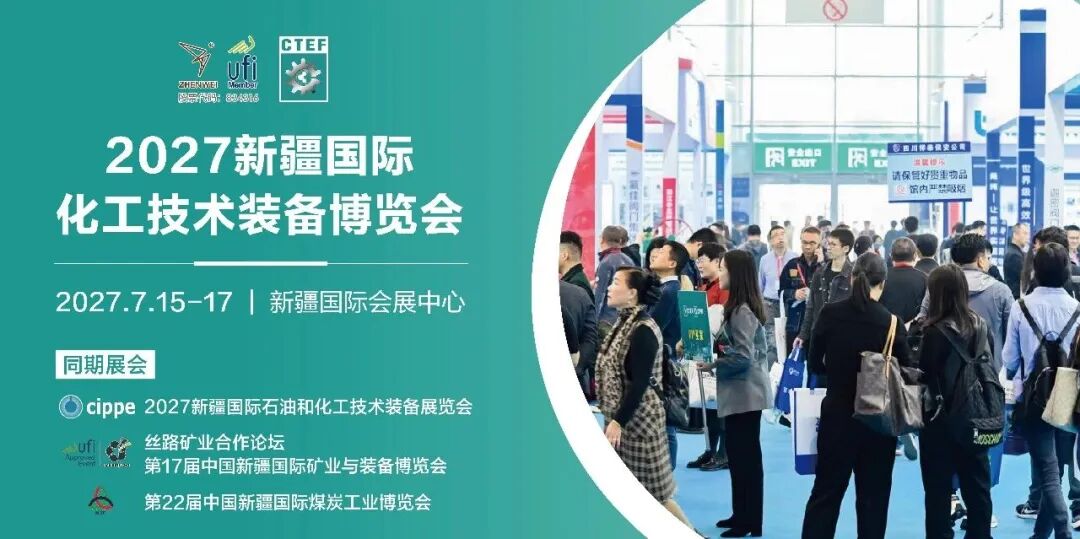
Xinjiang, as a core region of national energy security and a key Belt and Road hub, holds 50% of China's new oil and gas reserves and trillion-yuan-scale energy-chemical布局. The 2027 Xinjiang International Chemical Technology & Equipment Expo (CTEF Xinjiang) will be held July 15–17, 2027 at the Xinjiang International Convention and Exhibition Center, running alongside the 2027 Xinjiang International Petroleum & Chemical Technology & Equipment Exhibition, the Silk Road Mining Cooperation Forum, the 17th China Xinjiang International Mining & Equipment Expo, and the 22nd China Xinjiang International Coal Industry Expo. Expected to span 40,000 sqm, the show will bring together 500+ global enterprises including CNPC, Sinopec and CNOOC, and attract 30,000+ professional visitors from 14 Belt and Road core countries — building a full-supply-chain platform covering petroleum & petrochemicals, natural gas, oil & gas pipeline transmission, coal chemicals, salt chemicals, chlor-alkali chemicals and fertilizers across Northwest China. The expo helps enterprises seize the Northwest energy equipment market and open up Central Asia.
.webp)


Keep up with the latest developments of the Zhongwei Conference at any time
Subscribe to our blog to get free tips, inspiration, and resources to run an e-commerce business. All these resources will be sent directly to your inbox.
Latest updates
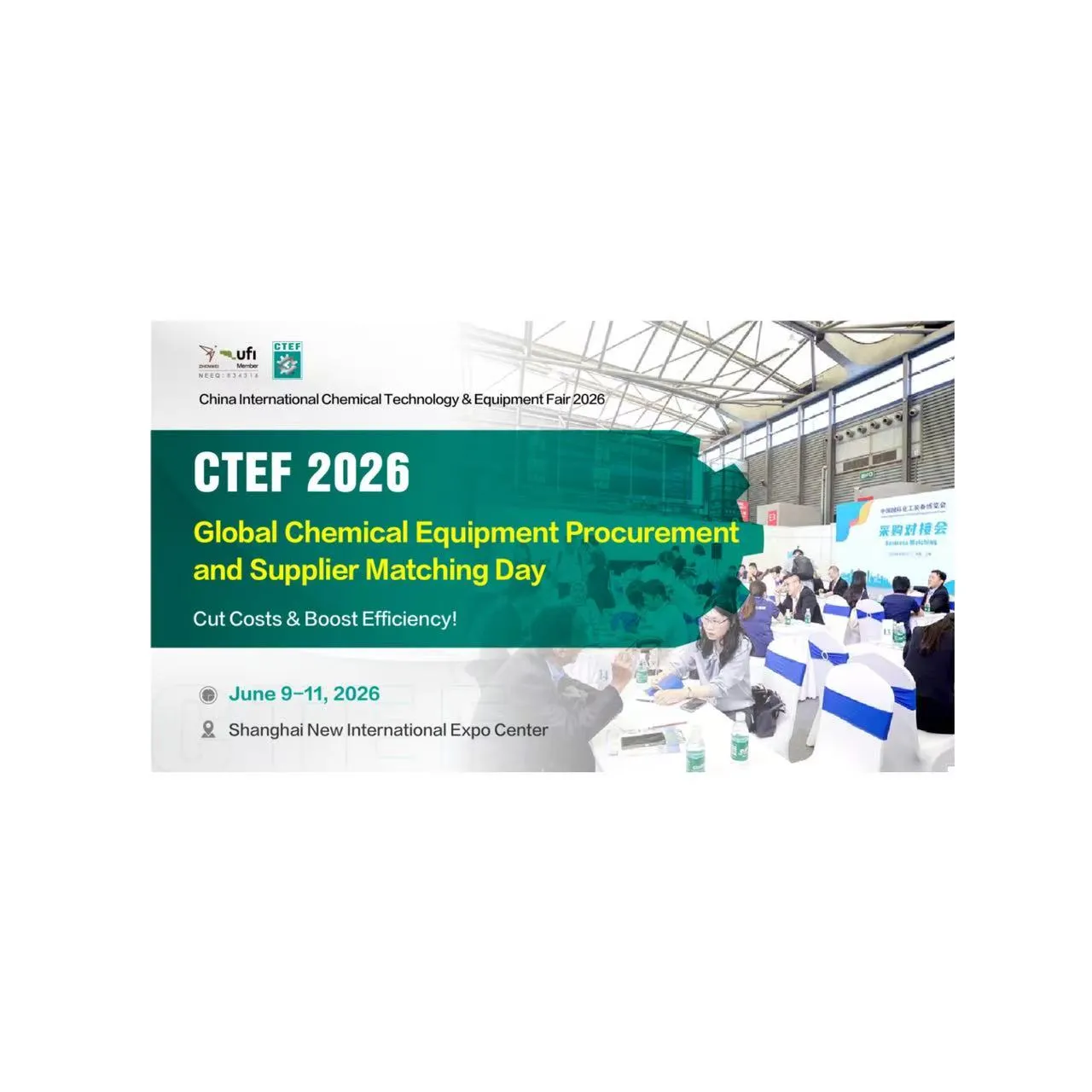
2026 CTEF Global Chemical Equipment Procurement and Supplier Matching Day
2026 | 06 | 09
Register Now
+
Craftsmanship Spirit, Honors Conferred! Call for Entries for the Annual Chemical Industry Golden Gear Award Launched!
2026 | 06 | 09
Register Now
+
Exhibition Preview | 14 Flagship Activities – Global Opportunities in Chemical Equipment
2026 | 06 | 09
Register Now
+
CTEF Heat Pump Distillation Energy Saving and Optimization Technology Forum
2026 | 06 | 10
Register Now
+
CTEF China International Chemical Equipment Innovation & Development Conference
2026 | 06 | 09
Register Now
+
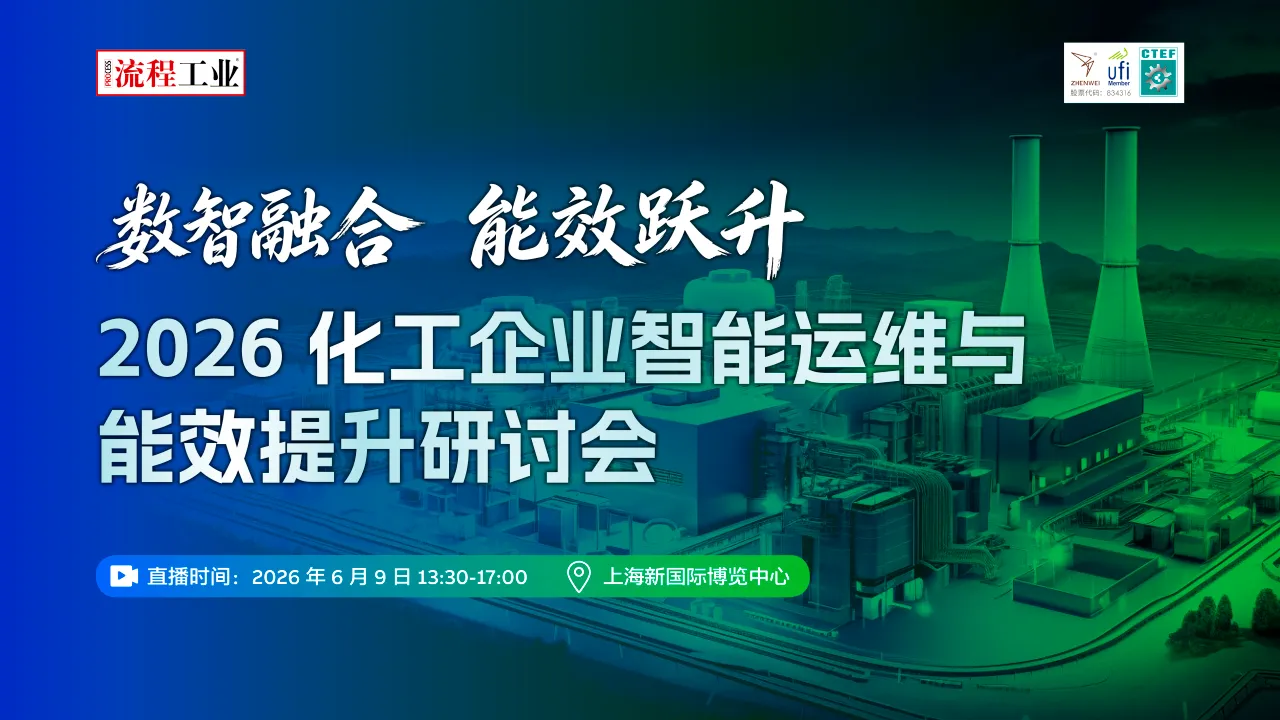
Seminar on Intelligent Operation and Energy Efficiency Enhancement of Chemical Enterprises
2026 | 06 | 09
Register Now
+
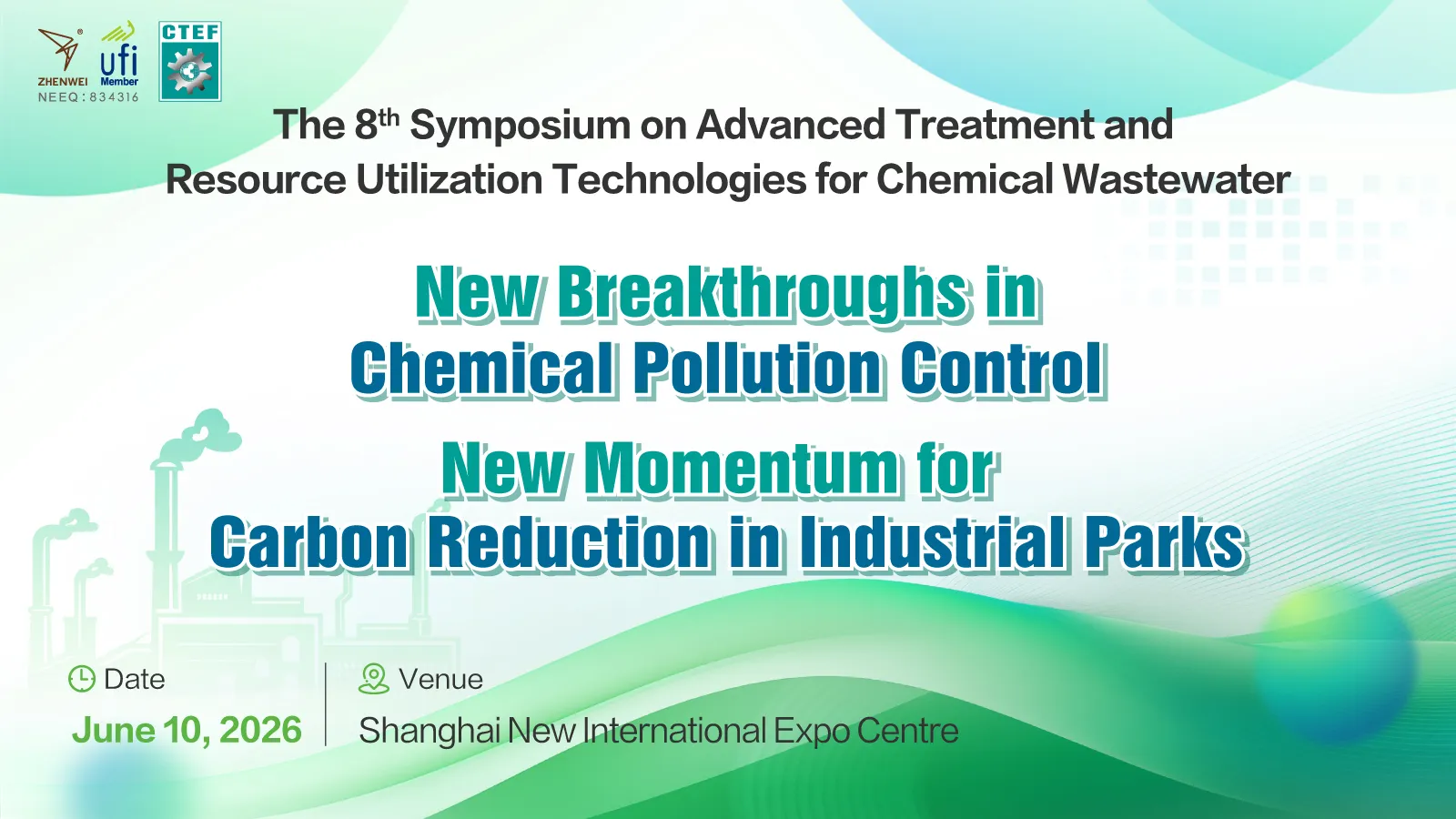
Symposium on Advanced Treatment and Resource Utilization of Chemical Industrial Wastewater
2026 | 06 | 10
Register Now
+
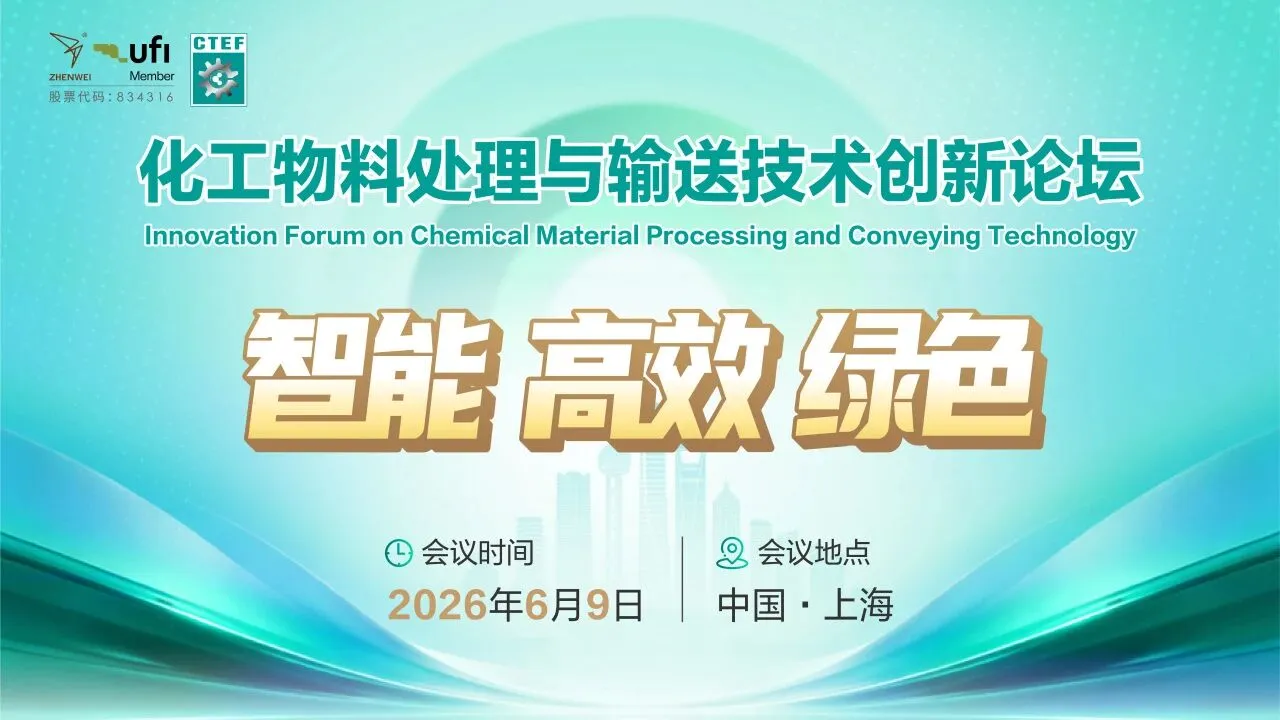
Chemical Material Handling & Conveying Innovation Forum Invitation
2026 | 06 | 10
Register Now
+
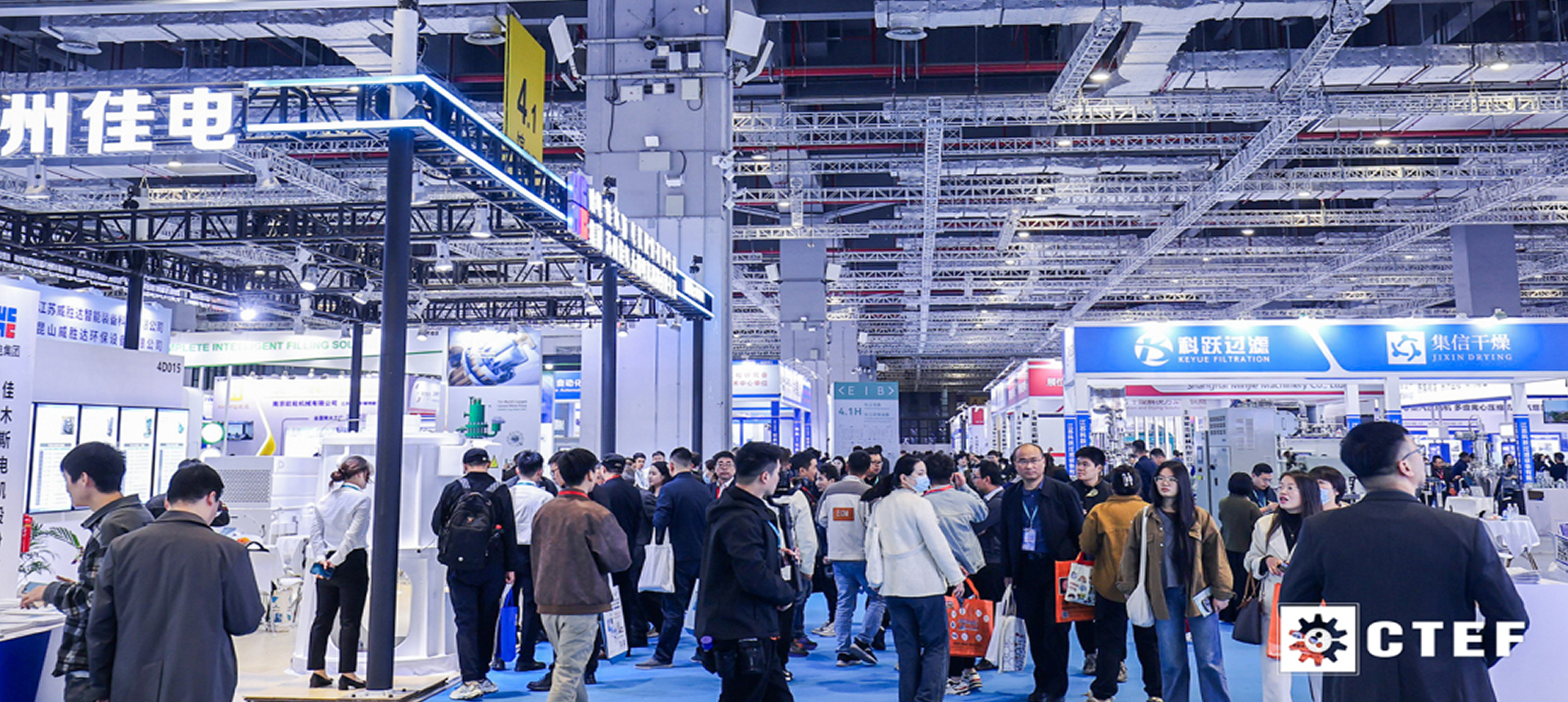
2025 China International Chemical Equipment Expo

China International Chemical Equipment Fair 2027
Organizer: Zhenwei Exhibition Group
Time: June 3-5 , 2027
Location: Shanghai New International Expo Center
About Event
Quick Entry
Business Cooperation
Tel:86-181 2799 1242
Address: Room 403-405, Fengpu Science and Technology Plaza, No. 2433 Xingang East Road, Haizhu District, Guangzhou, China