.webp)
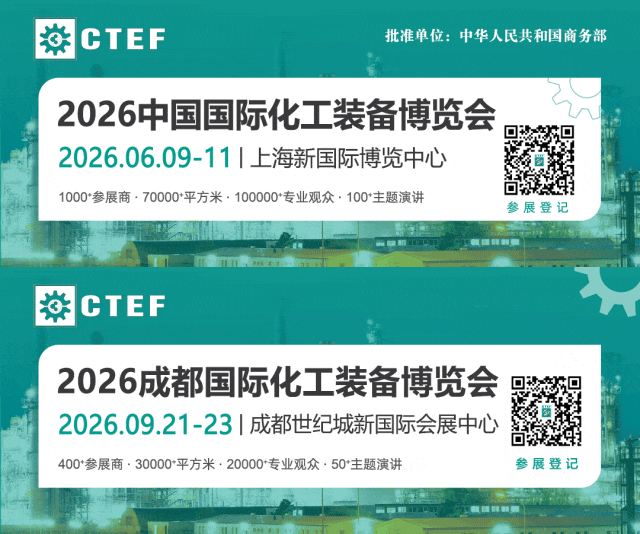
With the in-depth advancement of the "dual-carbon" strategy and the policy guidance of the "Work Plan for Stabilizing Growth in the Petrochemical Industry (2025-2026)," my country's chemical industry is accelerating its transformation towards green and intelligent manufacturing. Evaporation and crystallization technologies, as key links in achieving near-zero discharge of high-salinity wastewater, efficient material separation, and resource recovery, have been upgraded from auxiliary production units to core links affecting enterprises' energy consumption control and cost competitiveness.
With the continuous emergence of technological innovations such as MVR evaporators, multi-effect crystallization, and fractional salt resource utilization, the industry is constantly upgrading from "single equipment supply" to "systematic solutions." This forum will focus on cutting-edge areas such as low-energy MVR compressors, high-efficiency crystallization systems, special material evaporators, and waste heat cascade utilization, bringing together domestic and international experts and enterprise representatives to jointly explore technological breakthrough paths and industrial collaboration models, providing systematic solutions for energy conservation, carbon reduction, and resource recycling in the chemical, pharmaceutical, and environmental protection fields.

- Conference Speech Content Direction
• High-efficiency MVR evaporation system and core steam compressor energy-saving technology: Showcasing how the core of the MVR system—the steam compressor—achieves efficient recovery of latent heat of steam and reduces energy consumption through innovative technology, highlighting the product's advantages.
• Specialized evaporation crystallization technology optimization for high-viscosity, easily fouling materials: Sharing how specialized equipment such as thin-film evaporators and scraped-plate evaporators, through unique design, solve the concentration challenges of high-viscosity, heat-sensitive materials prone to coking and decomposition in the chemical and pharmaceutical industries.
• Digital twin and predictive maintenance of evaporation crystallization systems: Demonstrating how to achieve remote monitoring, fault prediction, and maintenance optimization by building digital twins of equipment, helping customers improve system uptime and reduce unplanned downtime losses.
• Industrial high-salt wastewater fractional crystallization resource recovery process and case analysis: Explaining how to achieve the conversion and recovery of mixed salts into high-purity single salts through precise control of the crystallization process, transforming environmental disposal costs into resource recovery benefits.
• Precise Control of Crystal Grain Size and Morphology in Continuous Crystallization Using AI Algorithms: This section introduces how AI models can analyze data in real time and automatically adjust key parameters such as supersaturation and temperature to stably produce high-value crystal products that meet specific grain size distribution requirements.
• Innovative Practices of New Materials in Improving Evaporator Corrosion Resistance and Thermal Conductivity: This section explores the application of new materials such as special alloys and composite materials in highly corrosive environments, demonstrating how they can significantly extend equipment lifespan and potentially improve energy efficiency through enhanced thermal conductivity.
• Design Concepts and Market Applications of Skid-Modified and Modular Evaporation Crystallization Units: This section elucidates the advantages of standardized and modular units designed for small- to medium-scale, distributed, or rapid deployment needs, such as short construction cycles, flexible investment, and ease of relocation, making them suitable for industrial parks or distributed projects.
• Energy Cascade Utilization and Waste Heat Recovery Technology in Evaporation Crystallization System Integration: This section focuses on how to couple and cascade the utilization of thermal energy of different grades (such as process waste heat and low-grade steam) in system design to maximize overall system energy efficiency and reduce dependence on external energy sources.
• Material selection, design, and long-term operation strategies for evaporation crystallization equipment under highly corrosive conditions: This section systematically introduces an integrated solution for handling materials containing chloride ions, acids, or alkalis, encompassing material selection (e.g., titanium), structural design, and online monitoring and maintenance to ensure stable long-term operation of the equipment.
• Pilot-scale verification and scale-up strategies for new evaporation crystallization technologies: This section shares a mature methodology for scaling up from pilot-scale equipment to industrial-scale production, including key parameter determination, equipment selection, and non-standard design considerations, reducing the risks and uncertainties associated with the industrialization of new technologies.
- Key Audience of the Conference
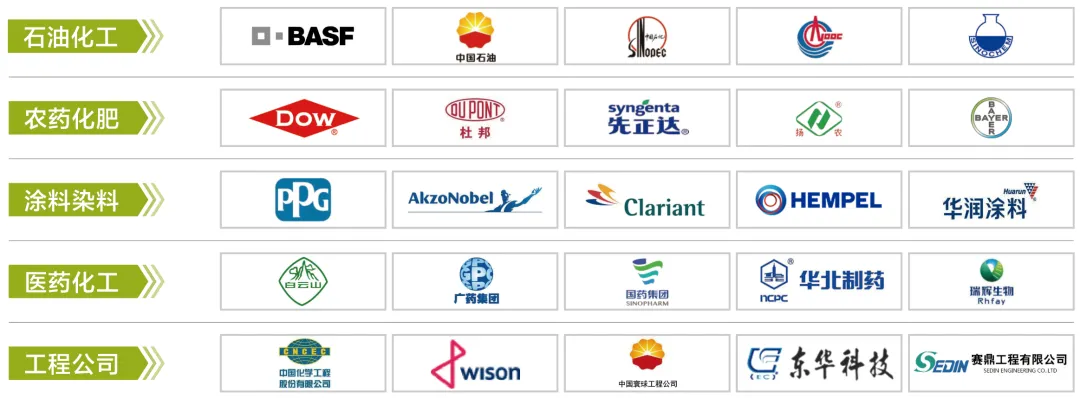
- Research and management personnel in large pharmaceutical companies, small and medium-sized pharmaceutical companies/CMOs, and chemical and fine chemical companies, engaged in product development, production process research, quality assurance, and related fields.
- Companies engaged in the production and manufacturing of heat exchangers and condensers; intelligent manufacturing technology providers; low-carbon technology providers; especially companies engaged in the research, development, production, and application of high-efficiency heat pipe heat exchange structures.
- Fine chemical and raw material intermediate research and development institutions and production enterprises; catalyst research and development institutions and production enterprises;
- Teachers and researchers in research institutions, universities, and chemical engineering design institutes engaged in research on high-efficiency heat pipe heat exchange structures and heat exchangers.
- Technical service providers: Entities providing design and technical services to chemical, fine chemical, and pharmaceutical companies, especially those involving high-efficiency heat transfer technology services.
- Registration Method
Here you will:
Engage with top industry experts
Master the latest trends for 2026
Connect with resources across the entire industry chain
Find the key to multiplying performance
Enhance your corporate brand image and industry influence
For conference sponsorship, roadshow presentations, registration, and group discussions, please contact the CTEF Organizing Committee – Mr. Zheng
17806537708 (WeChat ID: same as phone number)


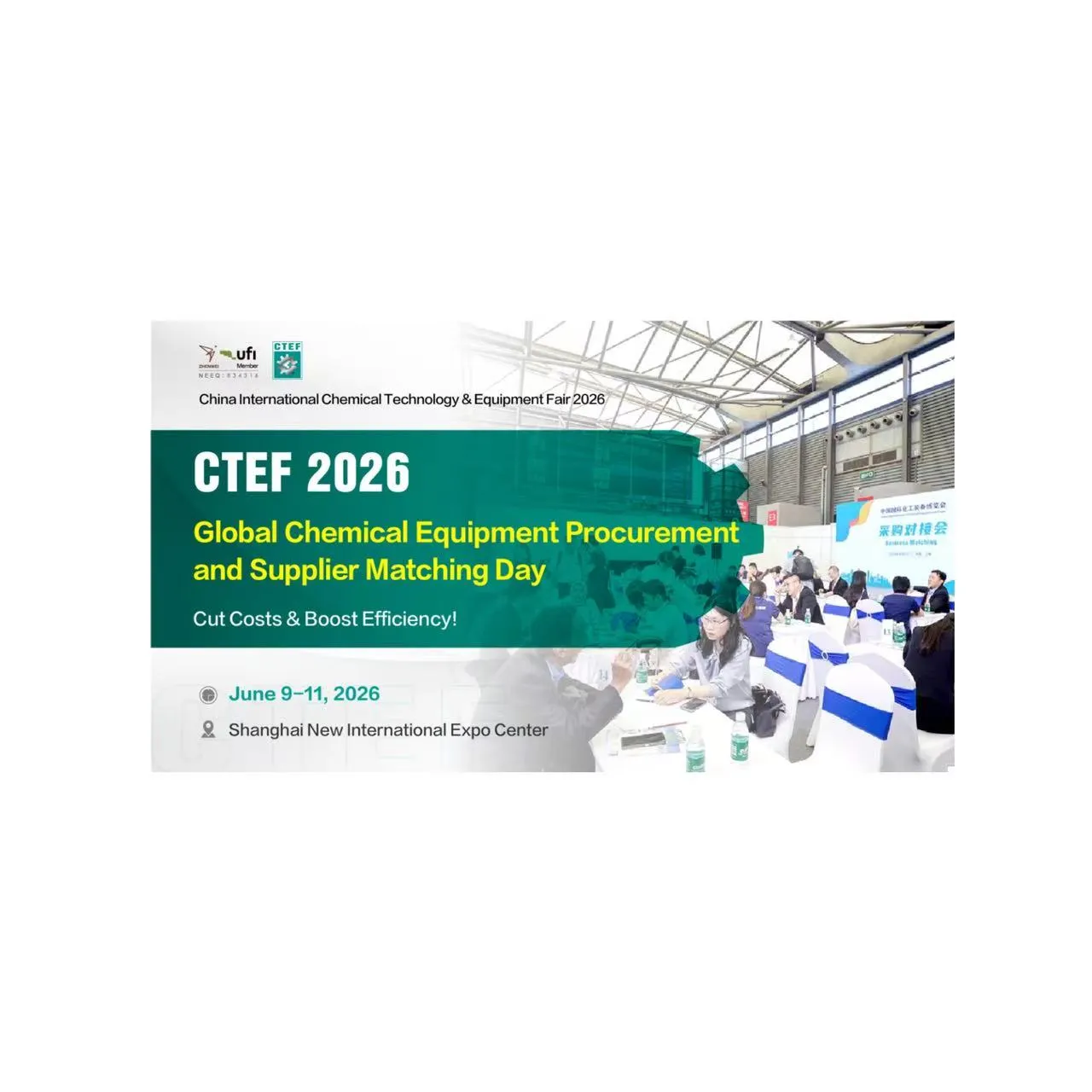

Time: September 21-23 , 2026
Location: chenydu century city New International Exhihition center
Tel:86-181 2799 1242